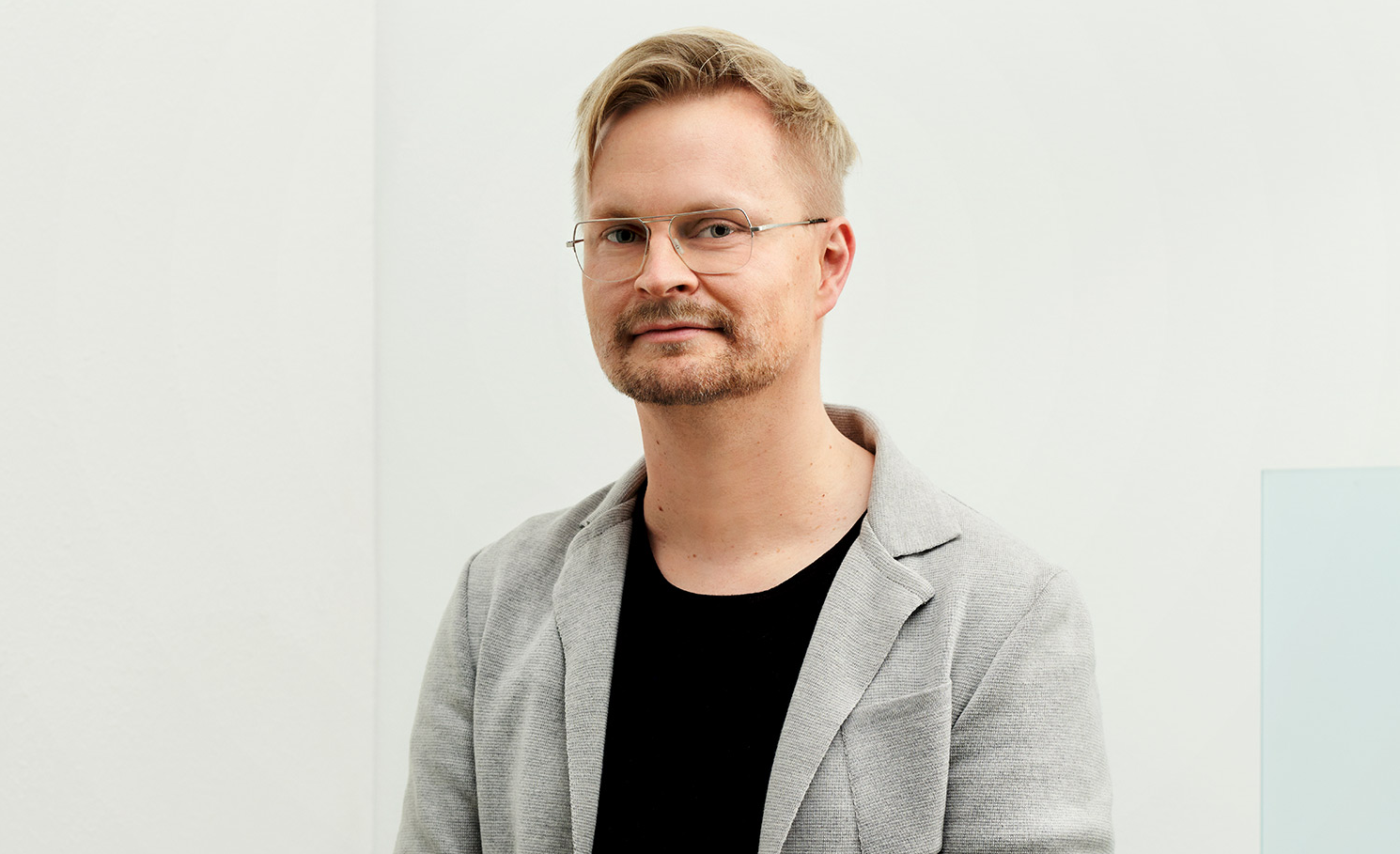
Eighteen geothermal drilling projects. Six years of drilling. For most, that would look like the track record of a solid Finnish engineering company. But for QHeat, those projects and boreholes are proof points for a bigger ambition: to shift from a local drilling business into an international deep tech scaleup, with a scalable, licensing-driven model.
That transformation, says Vesa Valonen, Chief Business Officer at QHeat, required more than technology. “We are a technology company, not a drilling company. Making that shift happen has required nothing less than redefining QHeat’s identity, both inside the company and in the eyes of customers.”
Making that shift tangible required a shared understanding of the new ambition, new business concepts, sales materials and commercial models, and also a new way of talking about the company.
Looking abroad with a new model
With a new licensing-based model, QHeat is bringing its patented geothermal system to markets across Europe.
QHeat's innovative coaxial geothermal heating, cooling and energy storage system drastically reduces emissions, offering real estate owners as well as energy and heating companies a pathway away from fossil fuels.
Scaling that promise internationally meant rethinking identity. The brand work began under the leadership of CEO and Co-founder Erika Salmenvaara, who recognised early on that strategic marketing would be a key enabler of international growth. That direction laid the foundation for QHeat’s ongoing shift toward a scalable licensing model.
The company’s rebrand made the transition tangible. “A new, professional brand helped us explain the new business focus externally,” Valonen says.

Along the way, marketing has become inseparable from strategy, the engine powering international growth. “For us, marketing is not a separate function but a core part of our business development.”
Priming conversations in new markets
When entering new markets, QHeat faced a challenge: deep geothermal is still an immature market. That’s why QHeat embraced demand generation as a marketing approach. “It supports spiking interest in immature markets and helps us start discussions in a way that works for a small company,” Valonen says.
For QHeat, demand generation means educating the market while building credibility. The goal isn’t to push for immediate action but to address industry challenges, highlight trends, and position geothermal as a viable solution. Consistent messaging, tailored content, and visible proof points all help create awareness and trust before the first meeting ever happens.
This approach translates into concrete actions: “We build high-level business concepts for different contexts, like waste-to-energy or datacenters. When we enter a new market, we identify the key players and create targeted content for them. What’s exciting now is how AI tools help us build precise audience lists in each market.”
Behind the scenes, the process is highly targeted. “We combine strong content and clear business concepts with very focused targeting. Efficiency is key for us as a small company.”
The impact shows up quickly: “When you meet a customer for the first time, they already know what QHeat is. The discussions are warm from the start.”
Conferences remain crucial meeting points
Digital demand generation sets the stage, but events have proven just as important.
“I thought events were dead, but they’re not,” Valonen admits. “In this industry they’re a big thing and a great conversation starter.”
QHeat’s management and technical experts often speak at conferences, while online visibility ensures people know the company before meeting face-to-face. “We see from the data that our target customers engage with our content, and then we meet them at events. It all works together.”
Helping partners succeed through marketing
With a technology licensing model, partners are central to QHeat’s business. Joint marketing is one of the practical ways to strengthen those relationships and succeed together in new markets.
“We have a partner-based business model: we license our offering to partners,” Valonen explains. “Some of our partners aren’t very seasoned in digital marketing, and that’s where we can add real value. By creating joint marketing operations, we can help our partners reach the market more effectively while promoting our combined offering.”
For QHeat, joint marketing is both a growth lever and a service to partners. It supports their visibility, builds credibility for geothermal solutions, and ensures that the joint value proposition is communicated clearly to the right audiences.
Marketing at the heart of QHeat’s next phase
As QHeat expands into Central Europe, marketing will remain central to how the company scales.
“Strategic marketing is a big part of what we do,” Valonen says. “It includes product marketing, how we develop our offering and how we talk about it, but also localisation, where we need to understand local quirks and the right channels in each market. Events and speaking opportunities are an essential part of how we engage with the industry, and joint marketing with partners continues to be an important way to bring value by promoting our combined offering.”
Looking further ahead, employer branding will also play a significant role. “When we scale into Central Europe and open local offices, attracting and retaining talent becomes critical. We want to be an exciting place to work, with a brand that reflects our culture and fosters a positive employee experience.”
What began with drilling projects in Finland is now an international technology business, powered not just by engineering, but by a clear story and a systematic approach to marketing. As Valonen puts it: “The interesting part is tying business development, product development, and marketing into one.”
For deep tech leaders, QHeat’s journey offers a clear takeaway: marketing is not a side activity. Done right, it is the growth engine that makes scaling possible.
Scaling with fractional marketing
To support its international growth, QHeat partnered with Brighten through a fractional marketing manager model. For Valonen, the value has been in combining business development, product development, and marketing into one cohesive effort.

“I’m not traditionally a marketing person, but I find it fascinating to see how strategy, product, target markets, and audience engagement all come together,” he says. “Having Brighten’s expertise has made that possible without us needing in-house senior marketing resources.”
For QHeat, the fractional approach offers both flexibility and scalability. “The fractional marketing model gives us scalable competence. If we have more needs, we can scale it up. It’s been very beneficial for us as a small company, and I would recommend it to others,” Valonen notes.
Vesa's key learnings for deep tech leaders
Valonen’s advice to other deep tech leaders comes down to two essentials:
1. Start from purpose
“It all starts from the big picture and your company’s purpose: why you exist and who you are,” he says. “The most important thing is that you can’t think of marketing as something separate. Understand who you are as a company, build a brand, and make it real through marketing.”
For QHeat, leadership alignment has been a decisive factor. “We are fortunate to have a CEO who understands the importance of brand and marketing, and is committed to focusing on it. Not all companies of our size make that choice. Every activity needs to support the bigger goal. It’s about seeing the big picture and translating it into concrete actions.”
2. Build business concepts systematically
Valonen stresses the importance of shaping solutions into clear business concepts and asking who could be interested in each. “Think carefully about who could be interested and shape your solution to fit.”
Here, marketing plays a critical role: it turns business concepts into concrete stories that resonate with different audiences. By testing messages, creating tailored content, and building campaigns around each concept, marketing ensures that ideas don’t stay abstract but reach the right customers in the right way.